How to Read an Audio Uasset File
Audio file types: what are they, and what is the difference?
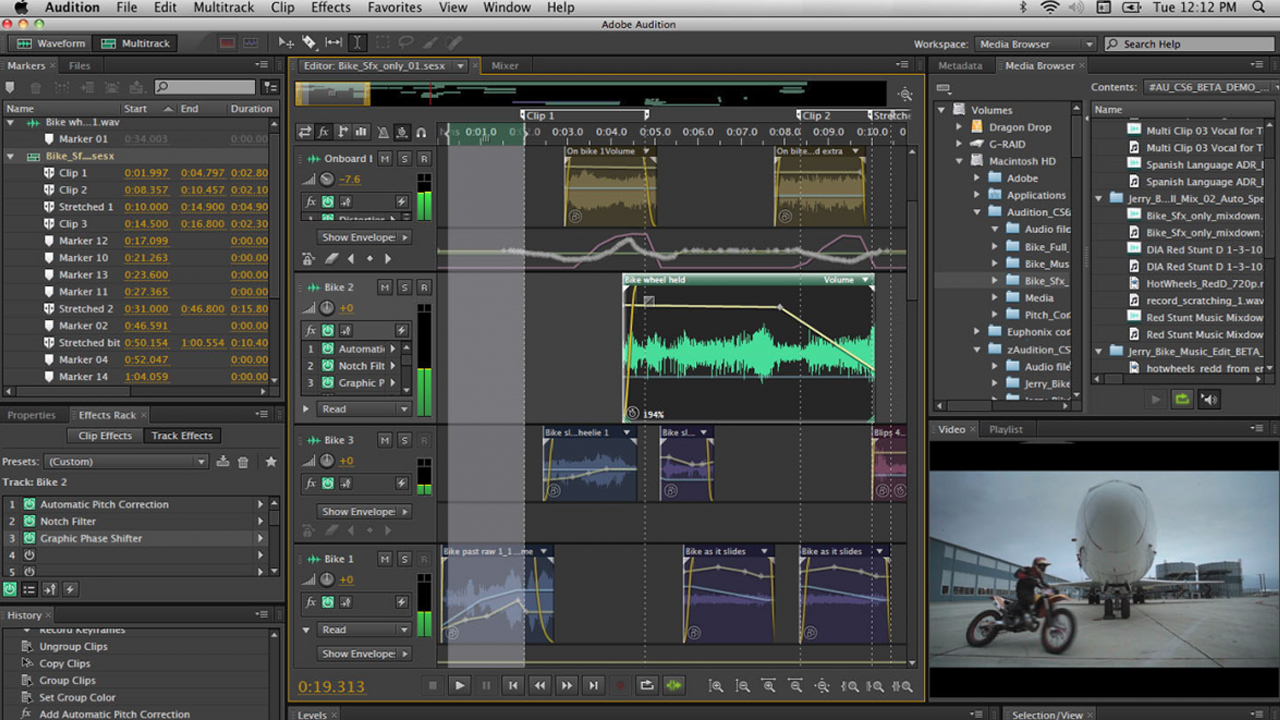
If you're looking to employ, copy, or edit sound files you should be aware of the various types, and the differences between them. While most of the all-time audio editing software packages will allow you to piece of work with most common file types, information technology'due south important to exist aware of which ones perform best under specific circumstances. Some are superior for listening and copying, whereas others play nicely with video and are easier to work with in terms of mixing and editing.
If your called audio file blazon is in the incorrect format for your needs, you lot can always get hold of one of the best audio converter software programs and adjust it. Some are gratis, and most are easy to use, so it doesn't take much to get your sound files exactly every bit you need them. Below are the most common audio file types, what each one means, and what the main differences are betwixt them. If you're in whatever doubtfulness virtually what type of file y'all're working with, the extension will tell you, and nosotros've included all common extension names with each entry.
The best home computers will happily recognize all the post-obit file types, and nigh volition play on all modernistic smartphones and tablets.
Waveform Audio (.wav)
Waveform Sound (.wav) is a common file format. Created past Microsoft and IBM, WAV was i of the beginning sound file types developed for the PC. WAV files are defined as lossless, meaning that files are big and complete; nix has been lost. Professionally recorded CDs are also a lossless sound source. In contrast, the 3 audio formats listed below are lossy-redundant and not-auditory data is removed to allow for more compact storage; in essence, some information has been lost. This process of removing information to compress the file size is called compression. The 3 file formats below must begin with a lossless format (such as a figurer WAV file) then compress it. About lossy formats boast little or no detectable change in sound quality. Just because each compressing format selects the deleteable data differently, converting one compressed file into another lossy format will sometimes result in lower quality audio. Again, always get-go with a WAV file, then compress.
MPEG-1 or ii Audio Layer 3 (.mp3)
MPEG-ane or 2 Audio Layer three (.mp3) is a common, compressed WAV file. MPEG-i files are about 1-12th the size of WAV files. This is why MP3 players can accommodate hundreds of songs on a tiny clamper of storage infinite.
Windows Media Audio (.wma) was developed to compete with the MP3 format for Windows Media Actor. Microsoft claims that the WMA files are compressed 3 times more than MP3s yet retain their original sound quality.
Advanced Sound Coding (.aac)
This is the audio file format used past Apple tree for iTunes and Music, and it's designed to be superior to regular mp3s. AAC compresses better than mp3, losing less audio quality than its older cousin. The master drawback is that AAC files take a little longer to encode than mp3, and then batch audio conversion takes a longer.
Ogg Vorbis (.ogg)
Ogg Vorbis (.ogg) is another compressed source code similar to MP3, just like WMA, more compressed. Ogg Vorbis is also open up source (costless to all, unlicensed, no strings attached). While MP3 compresses information at a abiding fleck rate, Ogg uses a variable bit rate. To illustrate-if you are copying chunks of silence into MP3 format, the pinch chip rate stays the aforementioned as if you lot were compressing the sound of an unabridged orchestra. But if you are copying chunks of silence into Ogg, your compression rate will drop to zero. The rate varies with the need.
Other audio file types
- Musical Instrument Digital Interface (.midi) Musical Musical instrument Digital Interface (.midi) is commonly used for computer keyboards and other computer-based musical tools. MIDI files contain musical notes, rhythm notation and other information often needed past a composer.
- Audio Interchange File (.aif, .aifc or .aiff.) Sound Interchange File (.aif, .aifc or .aiff.) was developed for the Mac reckoner to store sound files.
- Sun Audio (.au) Sunday Audio (.au) or Audio/Bones was developed by Dominicus Microsystems for apply on UNIX systems.
- Emblaze Audio (.ea) Emblaze Audio (.ea) was created by Geo and offers compression similar to MP3 formats, but its purpose is to be played with a Coffee applet-a miniature Net program. Online greeting cards ofttimes employ Coffee applet programs for motion and .ea sound files to play music.
- For more audio content, check our guide to the best audiobook services
- For more editing content, here'south our guide to the best video editing software
Source: https://www.toptenreviews.com/audio-file-types
Belum ada Komentar untuk "How to Read an Audio Uasset File"
Posting Komentar